
Top Investment Properties in St. Albert: Maximize Your Returns in 2026
Investment properties in St. Albert sit within one of Alberta’s most stable mid-sized markets. According to City of St. Albert data, the city’s population surpassed 69,000 residents in 2021, with steady growth of roughly 1% to 2% annually over the past decade. That consistent increase, combined with proximity to northwest Edmonton, keeps demand resilient for rentals and small commercial spaces. In 2026, investors evaluating this corridor are focusing on neighborhoods, asset types, and realistic return expectations.
Why are investment properties in St. Albert attracting attention in 2026?
St. Albert offers a rare blend of suburban stability and metropolitan access. The city connects directly to Edmonton via St. Albert Trail and Anthony Henday Drive, keeping commute times to downtown near 25 to 30 minutes in typical traffic. According to Statistics Canada 2021 Census, household incomes in St. Albert rank among the higher brackets in Alberta, supporting reliable rent collections and lower delinquency risk than many comparable markets across the province.
Quality-of-life drivers also support strong tenant retention. Servus Credit Union Place, the Arden Theatre, and St. Albert Centre create an amenity-rich core near Sir Winston Churchill Avenue and Boudreau Road. Red Willow Park and Lions Park line the Sturgeon River, offering extensive trail networks and recreation. These amenities draw long-term residents who often favor townhomes and secondary suites close to Paul Kane High School, Bellerose Composite High School, and École Secondaire Sainte Marguerite d’Youville.
Vacancy conditions add another layer of appeal. According to the latest CMHC Rental Market Report for the Edmonton CMA, which includes St. Albert, apartment vacancy has generally trended in the range of 4% to 7% in recent years. That level balances landlord choice with ongoing tenant demand, allowing realistic rent growth assumptions without depending on speculative spikes.
Which neighborhoods in St. Albert offer the strongest investment fundamentals?
Several neighborhoods stand out for investors focused on diversified returns. Erin Ridge and Erin Ridge North combine newer single-family homes with townhouses near Costco, Sturgeon Community Hospital, and major routes such as Sturgeon Road and Giroux Road. According to Realtor.ca, listings in these areas frequently cluster in the mid to upper price bands, with many investment-suitable properties trading between roughly $400,000 and $650,000, depending on age and suite potential.
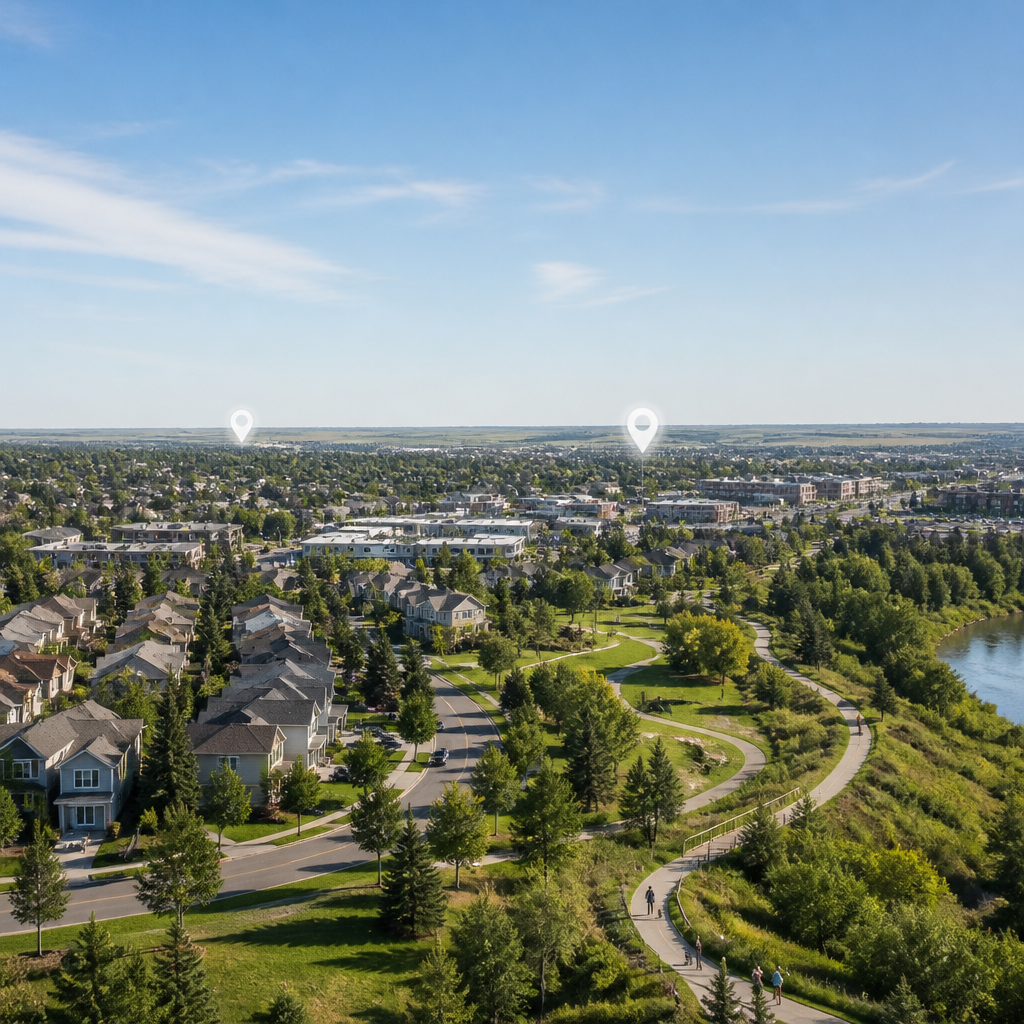
An investor walking through Grandin near Grenfell Avenue on a summer evening encounters mature trees arching over quiet streets, the smell of barbecues drifting from fenced yards, and the soft echo of basketballs on neighborhood courts. The breeze carries faint traffic noise from St. Albert Trail, yet paths toward Red Willow Park feel sheltered and green. That mix of calm residential character and fast access to the city’s core helps rental listings here stand out, especially for families seeking proximity to Elmer S. Gish School.
Lacombe Park, Akinsdale, and Mission offer strong fundamentals for long-term holds. Many bungalows and bi-levels in these districts feature detached garages and lane access, ideal for future garden suites as regulations evolve. According to St. Albert Economic Development, the city maintains a non-residential tax share of roughly 25% to 30%, supporting infrastructure without overburdening residential owners. Properties along Hebert Road and near Lacombe Lake Park particularly benefit from this balance.
What rental property types perform best in St. Albert?
Secondary suites in detached homes are among the most flexible investments. In Erin Ridge, Heritage Lakes, and Deer Ridge, well-finished suites near schools like Sir George Simpson Junior High and Neil M. Ross Catholic School can appeal to multi-generational households and professionals. Based on listings data from Realtor.ca, many suited properties in these districts fall between approximately $450,000 and $700,000, allowing mortgage coverage through combined upper and lower rents in balanced scenarios.
Along Boudreau Road, near the restaurants at St. Albert Centre and cafés close to The Cajun House, the evening air often carries a mix of roasted coffee and grilled food aromas. Patio laughter blends with the low hum of traffic moving toward St. Albert Trail, while storefront lights reflect off parked cars and wet pavement after summer rain. Investors standing on this corridor can almost feel the steady foot traffic that supports mixed-use and small commercial properties anchored by local businesses.
Purpose-built townhomes and low-rise condos near St. Albert Trail and Giroux Road also draw interest. According to Walk Score, central St. Albert posts scores in the range of 40 to 55, signaling car-friendly layouts with growing pockets of walkability. Projects near Servus Credit Union Place, Jack’s Burger Shack, and XIX Nineteen St. Albert become attractive to tenants prioritizing quick vehicle access to Anthony Henday Drive along with short walks to dining and recreation.
How do numbers stack up for cash flow and returns in St. Albert?
Under conservative assumptions, entry-level rentals in St. Albert can support stable, moderate yields. According to CMHC, average two-bedroom rents across the Edmonton CMA sit in a band near $1,300 to $1,550 per month in recent reporting periods. Well-located secondary suites in areas like Oakmont or Braeside sometimes command combined household rents approaching $2,400 to $2,800, depending on finish level and parking availability.
Acquisition budgets must reflect both price and condition. Based on current ranges observed on Realtor.ca, many rentable single-family homes in St. Albert trade between roughly $375,000 and $750,000. Investors targeting cash flow often focus on properties below the midpoint of that band, then allocate $20,000 to $40,000 in renovations for legal suite creation, egress upgrades, and durable finishes that lower long-term maintenance costs.
Return projections should favor sustainability over aggressive appreciation bets. According to historical resale trends referenced by the REALTORS® Association of Edmonton, many suburban communities in the region have delivered annualized price growth in the approximate range of 2% to 4% over extended periods. Pairing that trajectory with cap rates in the low to mid single digits can create total return expectations near 6% to 9% when properties are purchased and managed prudently.
What strategies help protect an investment property in St. Albert over time?
Regulatory awareness forms the foundation of risk management. St. Albert’s land use bylaws and secondary suite rules evolve as housing needs change. According to the city’s Planning and Development information, suite approvals typically require separate entrances, proper fire separation, and dedicated parking. Planning for compliance during acquisition helps avoid unexpected costs of $10,000 to $25,000 after possession, which can significantly alter cash flow projections.
Location selection also mitigates vacancy risk. Properties within approximately 800 to 1,200 meters of major bus routes on St. Albert Trail, Boudreau Road, or Sir Winston Churchill Avenue benefit from St. Albert Transit’s frequent service. The city’s Transit maps highlight connections to Edmonton’s transit network, increasing appeal for commuters seeking predictable travel times and lowering turnover risk among car-light households in neighborhoods like Mission or Grandin.
Physical resilience matters as well. Homes near Lacombe Lake Park, Heritage Lakes, and Riel Recreation Park should be evaluated for grading, drainage, and exterior material performance in freeze-thaw cycles that routinely span temperature swings of more than 30 degrees Celsius between winter and summer. Durable roofing, quality windows, and low-maintenance landscaping may increase upfront budgets by $15,000 to $35,000 but often reduce long-run repair volatility and insurance claims.
The 69,000-resident figure cited at the start of this guide reflects sustained demand fundamentals that rarely appear overnight and seldom vanish quickly. That same population baseline from the opening underscores how incremental 1% to 2% annual growth compounds tenant depth across St. Albert’s neighborhoods. The REALTORS® Association of Edmonton monthly statistics portal offers granular data on sales volumes, inventory, and price bands across the wider region. Investors who register data alerts, monitor listing activity weekly, and schedule property tours within 48 hours of suitable opportunities before the late-spring surge in May typically secure stronger negotiation positions, while those delaying engagement until after Q2 often face reduced selection, firmer pricing, and slimmer projected cash flow margins.
FROM OUR BLOG

Understanding Foreclosures in St. Albert: What Buyers Need to Know in 2026
Understanding Foreclosures in St. Albert: What Buyers Need to Know in 2026 Foreclosures in St. Albert attract attention because they sometimes appear to offer discounts compared with traditional listings. In a city of roughly 65,000 to 75,000 residents, even a small number of distressed sales can in

St. Albert Homes for First-Time Buyers: Your 2026 Guide to Finding the Perfect Home
St. Albert Homes for First-Time Buyers: Your 2026 Guide to Finding the Perfect Home St. Albert combines small-city charm with direct access to northwest Edmonton, making it a strategic choice for new purchasers. According to Realtor.ca, active listings in St. Albert typically range from roughly $260